
Running a successful financial advisory business requires much more than understanding investment strategies, retirement planning, and wealth management principles.
Whether you specialize in
- financial planning
- retirement planning
- wealth management
- insurance planning
- investment advisory services
- estate planning
You also need systems that help you attract qualified prospects, nurture relationships, manage client communication, and deliver an exceptional client experience.
As your advisory business grows, the operational side can quickly become overwhelming.
You may find yourself spending hours every week:
- 📞 Responding to inquiries from prospective clients
- 📅 Scheduling consultations and annual review meetings
- 💬 Following up with prospects after discovery calls
- 📋 Organizing client information and meeting notes
- 📄 Managing onboarding processes and documentation
- 📧 Sending reminders and educational communications
- ⭐ Building credibility and encouraging referrals
Without efficient systems in place, these responsibilities can lead to:
- ❌ Missed opportunities to acquire new clients
- ⏳ Delayed responses to prospects
- 📉 Inconsistent follow-up practices
- 😓 Administrative burnout
- 🤝 Frustrated clients and weaker relationships
This is where GoHighLevel for Financial Advisors can help.
GoHighLevel is an all-in-one CRM and marketing platform designed to help service-based businesses streamline communication, automate repetitive tasks, and improve relationship management.
For financial advisors, it can become a centralized system for managing:
- 👥 Prospects and client relationships
- 📅 Consultation scheduling
- 🤖 Automated follow-ups and reminders
- 🚀 Lead generation campaigns
- 📄 Client onboarding workflows
- ⭐ Reputation management and referrals
- 📊 Reporting and business analytics
Instead of juggling multiple spreadsheets, disconnected tools, and scattered communication channels, you can manage many of your client-facing activities from a single platform.
Whether you're a:
- 💼 Independent financial advisor
- 📈 Wealth manager
- 🏦 Financial planner
- 👨👩👧 Retirement planning specialist
- 🛡️ Insurance-focused advisor
- 🏢 Growing financial advisory firm owner
This guide will show you how to use GoHighLevel to create stronger systems, improve client experiences, and position your advisory business for sustainable growth.
⚡ TL;DR:
If you're short on time, here's what you need to know about GoHighLevel for Financial Advisors:
- ✅ Capture and organize prospect inquiries from multiple channels.
- ✅ Track prospects and clients using customizable CRM pipelines.
- ✅ Automate follow-ups so no opportunity is overlooked.
- ✅ Allow prospects to schedule consultations online.
- ✅ Generate more qualified leads with funnels and landing pages.
- ✅ Simplify client onboarding and communication workflows.
- ✅ Strengthen your reputation through consistent relationship-building strategies.
- ✅ Monitor business performance using reporting and analytics tools.
- ✅ Integrate GoHighLevel with the tools you already use to streamline operations.
📈 Why This Matters
The financial services industry is built on trust, relationships, and consistency.
Prospective clients aren't simply looking for someone who understands markets and investment products.
They're looking for advisors who are:
- ⚡ Responsive
- 🤝 Trustworthy
- 📋 Organized
- 💬 Easy to communicate with
- 🎯 Focused on their long-term financial goals
At the same time, financial advisors often struggle to balance client service with business development and administrative responsibilities.
Without efficient systems, it becomes difficult to grow while maintaining a personalized experience.
By implementing GoHighLevel strategically, your financial advisory business can:
- 🚀 Improve operational efficiency.
- 💬 Strengthen client communication.
- 📅 Simplify consultation scheduling.
- 🤝 Enhance relationship management.
- 📈 Position itself for sustainable growth.
The goal isn't simply to attract more prospects.
The goal is to build systems that allow you to serve clients exceptionally well while creating a business that supports your long-term vision.
Let's explore how GoHighLevel for Financial Advisors can help you build a more organized, client-focused, and scalable advisory business. 📈🤝📊🚀
Important Note: Financial advisors should always ensure that any marketing activities, communication practices, and client record management processes align with applicable regulatory and compliance requirements within their jurisdiction.
Why Financial Advisors Need GoHighLevel
Being knowledgeable about investments, retirement strategies, and wealth management is essential for any financial advisor.
However, expertise alone isn't enough to build a thriving advisory business.
Whether you're an independent advisor or part of a larger firm, you also need systems that help you attract prospects, nurture relationships, manage communication, and deliver an exceptional client experience.
Many financial advisors begin by managing everything manually.
You may find yourself:
- 📞 Following up with prospective clients individually.
- 📅 Scheduling consultations and annual review meetings.
- 📄 Managing onboarding paperwork and documentation.
- 💬 Sending reminders and educational communications.
- 📋 Organizing client information across multiple platforms.
- ⭐ Encouraging referrals from satisfied clients.
While this approach may work initially, it often becomes increasingly difficult as your client base expands.
This is where GoHighLevel can become a valuable business tool.
💼 Modern Clients Expect More Than Financial Expertise
Today's clients aren't simply looking for someone who understands investment products.
They want financial advisors who are:
- ⚡ Responsive to their questions and concerns
- 🤝 Trustworthy and dependable
- 📋 Organized and detail-oriented
- 💬 Clear and consistent communicators
- 🎯 Focused on helping them achieve their goals
Before choosing an advisor, many prospective clients will:
- 🔍 Research advisors online.
- ⭐ Read reviews and testimonials.
- 🌐 Visit websites and educational resources.
- 📞 Reach out to multiple firms.
- 🤝 Compare communication styles and professionalism.
If your follow-up process is slow or inconsistent, prospects may choose another advisor.
📞 Capture More Qualified Opportunities
Every inquiry could represent a valuable long-term client relationship.
Prospective clients may seek assistance with:
- 📈 Investment planning
- 👨👩👧 Retirement planning
- 💰 Wealth management
- 🛡️ Insurance planning
- 📚 Education funding strategies
- 🏠 Estate and legacy planning
Without a structured system, these opportunities can easily be overlooked.
GoHighLevel helps you:
✅ Capture inquiries automatically.
✅ Organize prospect information.
✅ Track communication histories.
✅ Monitor opportunities throughout the sales process.
This visibility helps improve responsiveness and conversion rates.
🤖 Improve Follow-Up Consistency
Many prospects don't become clients immediately.
They often need time to:
- 💬 Understand their financial options.
- 👨👩👧 Discuss decisions with family members.
- 📋 Compare different advisors.
- 🤝 Build trust before committing.
Without consistent follow-up, these opportunities can disappear.
GoHighLevel allows you to automate important touchpoints so prospects continue hearing from you without requiring constant manual effort.
This helps keep your advisory business top-of-mind.
📅 Simplify Consultation Scheduling
Coordinating discovery meetings and review appointments manually can consume valuable time.
Endless email exchanges often delay the process.
GoHighLevel allows prospects and clients to schedule appointments through:
- 🌐 Your website
- 📄 Landing pages
- 📧 Email communications
- 💬 SMS messages
- 📱 Other supported channels
This convenience improves the client experience while reducing administrative burdens.
📋 Stay Organized as Your Business Grows
Financial advisors often manage large amounts of client information.
GoHighLevel helps centralize important details such as:
- 👤 Client contact information
- 📞 Communication histories
- 📧 Email interactions
- 💬 SMS conversations
- 📝 Internal notes
- 📅 Meeting schedules
- 🎯 Client goals and objectives
- 📄 Onboarding progress
Having everything in one place improves organization and service delivery.
⏳ Reduce Administrative Work
Many advisors spend significant time handling repetitive administrative activities.
Examples include:
- 📞 Returning inquiries.
- 📅 Scheduling appointments.
- 📧 Sending reminders.
- 💬 Following up with prospects.
- ⭐ Encouraging reviews and referrals.
Automation helps reduce this workload.
This gives you more time to focus on activities that create value for your clients.
⭐ Build Trust Through Social Proof
Financial decisions often involve significant levels of trust.
Prospective clients want confidence that they're working with someone who is:
- 💼 Knowledgeable
- 🤝 Professional
- 📋 Organized
- 💬 Communicative
- 🎯 Client-focused
Positive feedback and referrals help establish credibility.
A strong reputation can help your business:
✅ Generate more inquiries.
✅ Improve consultation bookings.
✅ Encourage client referrals.
✅ Differentiate your practice from competitors.
GoHighLevel's reputation features can support these efforts.
📈 Support Long-Term Business Growth
Growing a financial advisory practice requires more than technical expertise.
You also need systems that help you:
- 🎯 Generate qualified leads.
- 📞 Manage inquiries effectively.
- 📅 Coordinate consultations efficiently.
- 🤝 Strengthen client relationships.
- 📊 Understand business performance.
GoHighLevel brings many of these capabilities together in one platform.
This allows you to operate more strategically while preparing your practice for future growth.
🚀 Focus More on Serving Your Clients
Most financial advisors entered the profession because they enjoy helping people improve their financial futures.
Unfortunately, administrative responsibilities can sometimes take away from that purpose.
By automating repetitive tasks, you gain more time to:
- 📈 Develop financial strategies.
- 🤝 Strengthen client relationships.
- 🎯 Guide clients toward their goals.
- 💡 Provide valuable education.
- 📊 Grow your advisory business intentionally.
🌟 Build a Stronger Advisory Practice
At the end of the day, GoHighLevel isn't designed to replace your expertise as a financial advisor.
Instead, it's designed to support the business side of your advisory practice.
When used strategically, it can help you:
✅ Improve communication.
✅ Strengthen client experiences.
✅ Reduce administrative burdens.
✅ Increase growth opportunities.
✅ Position your practice for long-term success.
Financial advising is about helping people navigate important life decisions and achieve meaningful goals.
With the right systems supporting your operations, you'll be better equipped to deliver exceptional service while building a more organized and sustainable advisory business. 📈🤝📊🚀
Important: Financial advisors should always ensure that any marketing activities, communication practices, and client management workflows comply with the regulatory requirements applicable to their jurisdiction.
Setting Up GoHighLevel for Your Financial Advisory Business
Once you've decided to use GoHighLevel for your financial advisory practice, the next step is setting it up in a way that supports your workflow, strengthens client relationships, and improves operational efficiency.
A thoughtful setup can help you manage prospects, organize client interactions, streamline communication, and create a smoother experience from the first consultation to long-term client retention.
The good news?
You don't need to implement everything at once.
The most effective approach is to start with the essentials and gradually expand your setup as your advisory business grows.
Step 1: GoHighLevel Account Creation
To start your journey with GoHighLevel, head over to gohighlevel.com/30-day-trial, and you will be redirected to the page below.

The next thing you want to do is click “30 DAY FREE TRIAL” at the left corner of your screen, and the page below will pop up.
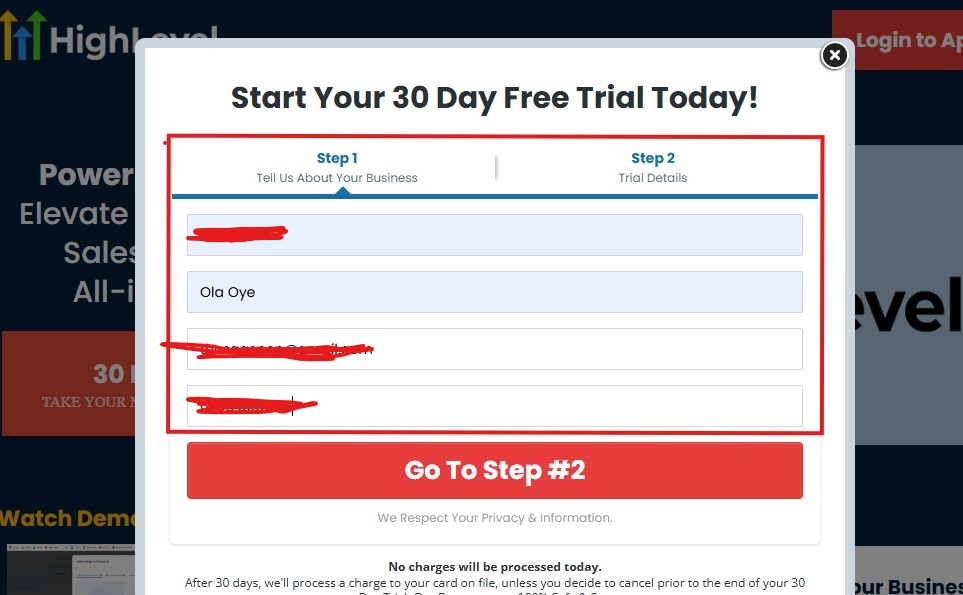
As you can see above, you need to supply your:
- Business name
- Your name
- Email address
- Phone number
Supply everything accordingly and click on “Go To Step #2” and the page below will pop up.
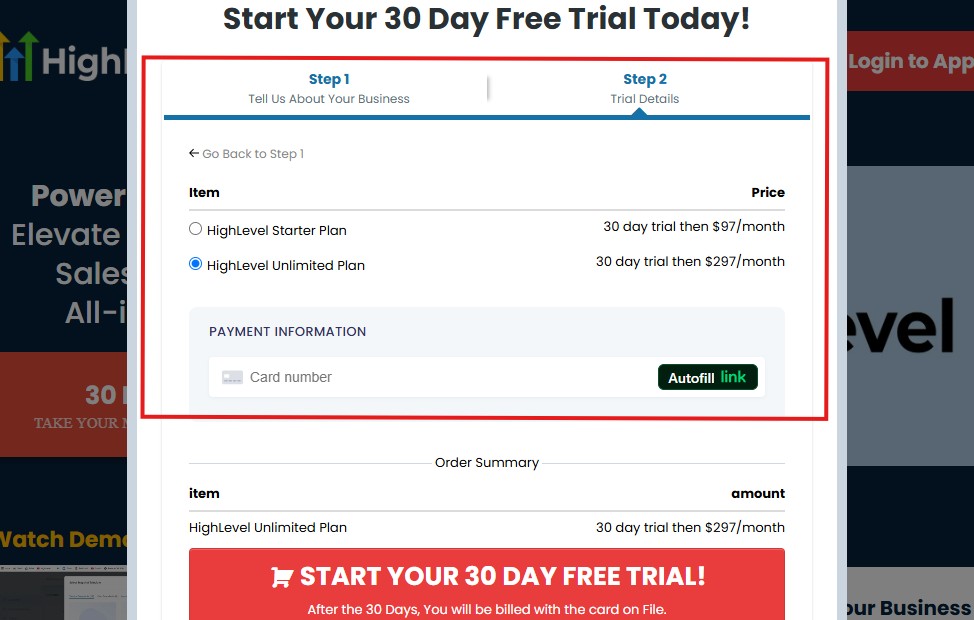
As you can see above, you need to:
- Select a plan
- Enter your credit card details
You can select the “Unlimited Plan that goes for $297/month“. You can upgrade or downgrade later.
Then click on “START YOUR 30 DAY FREE TRIAL” and you will have the page below next!
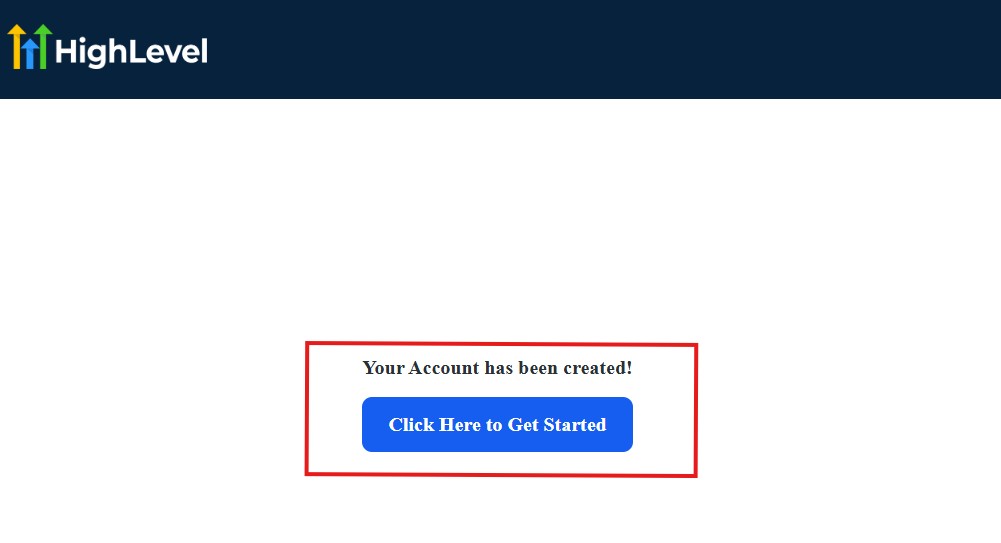
Then, click on “Click Here to Get Started“
And then, you need to start answering the onboarding questions.
Step 2: GoHighLevel Onboarding Questions
The onboarding questions help GoHighLevel understand why you have signed up for GHL and help personalize your experience accordingly.
After you have clicked on “Click Here to Get Started.” above, you will see the page below.
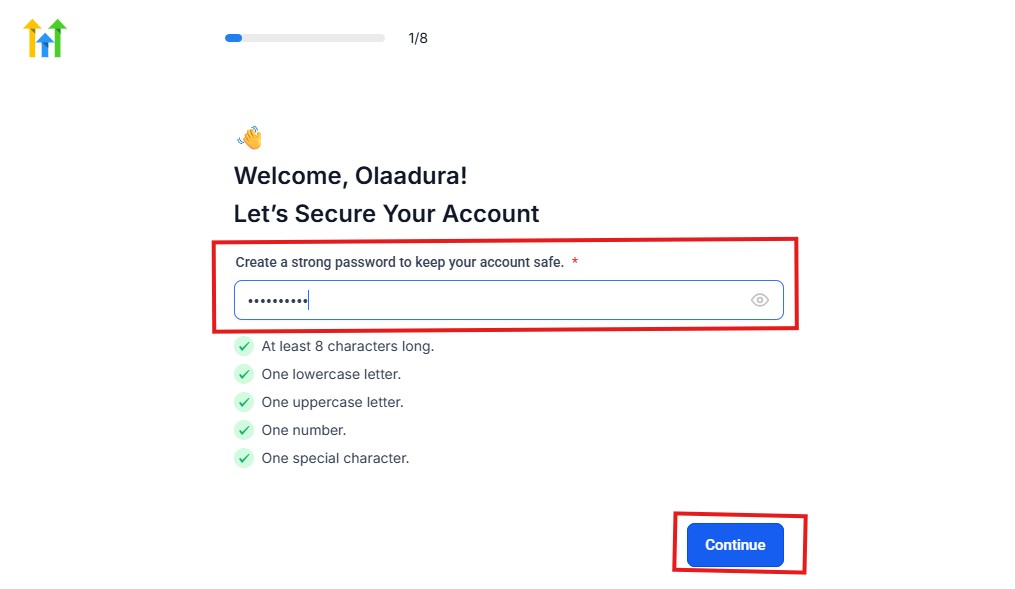
As you can see above, you need to choose a password, and it must match these characters:
- At least 8 characters long
- One lowercase letter
- One uppercase letter
- One number
- One special character
If your password matches everything above, then everything should be green and hit the continue blue button.
Next, you have the page below.
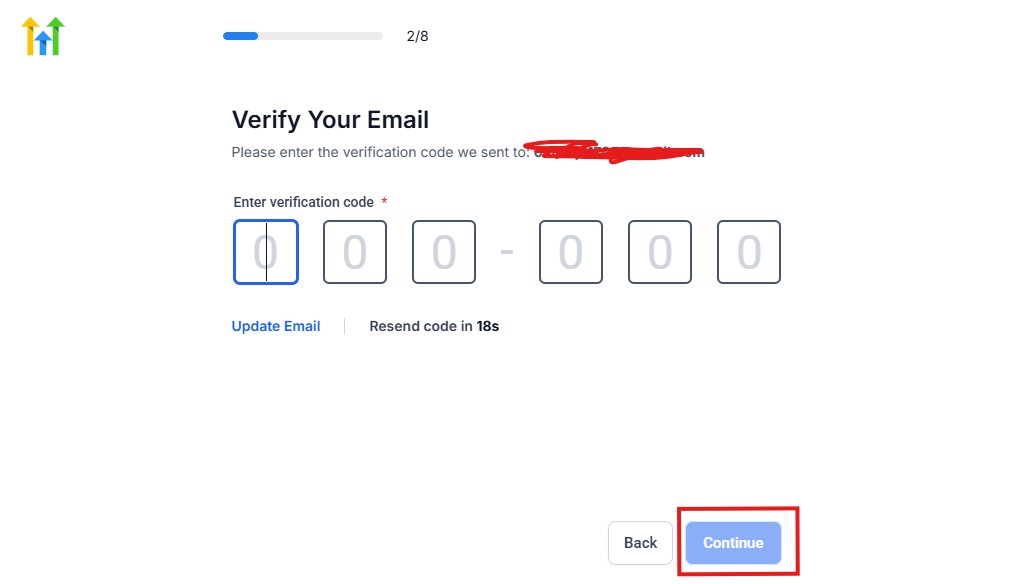
From the image above, you need to confirm your email address and do the same thing with your phone number, too.
The next page will ask you for your billing address.
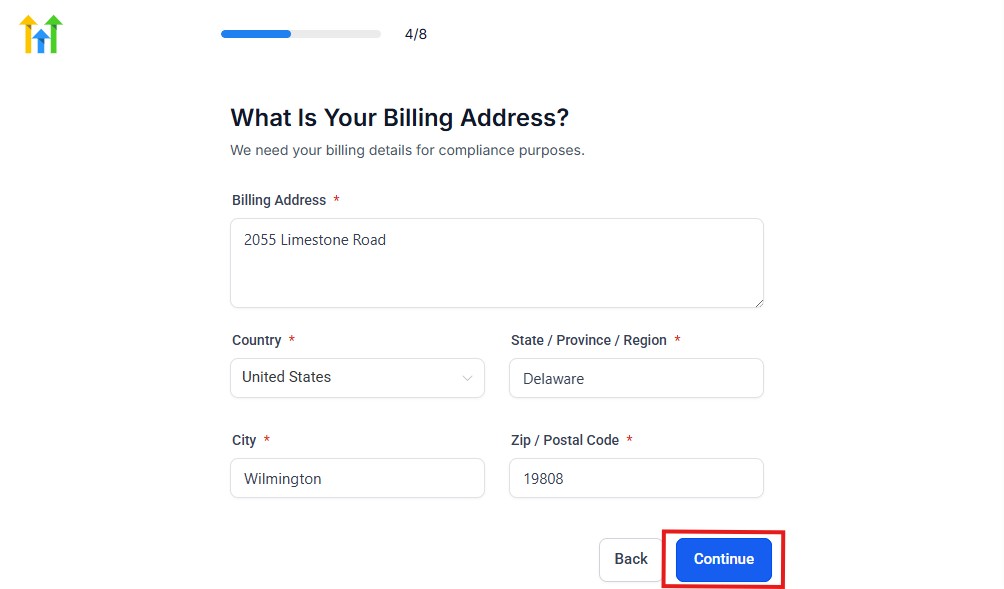
Supply everything accordingly and click on the continue blue button, and you will have the page below.
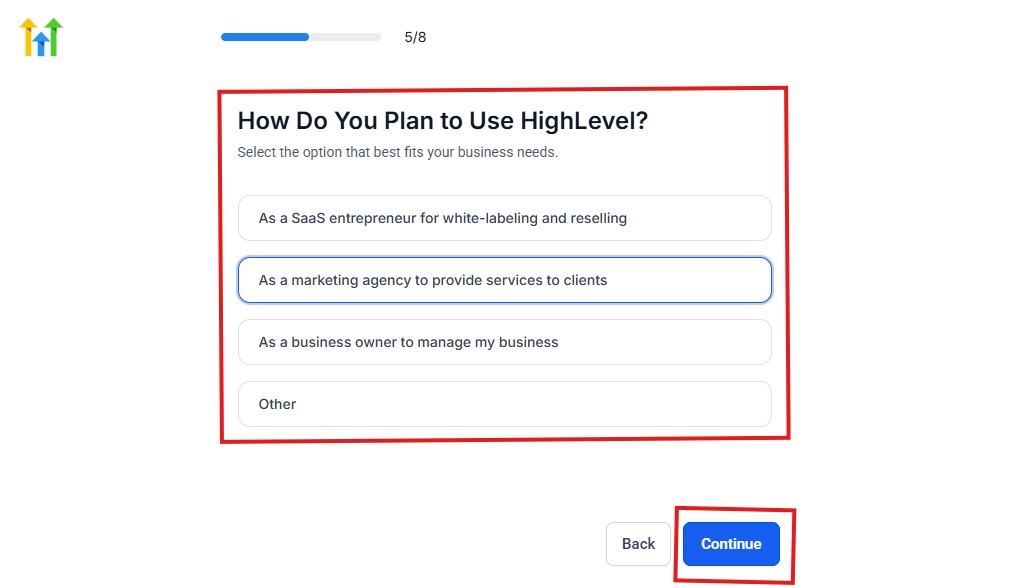
As you can see above, you need to select how you plan to use GoHighLevel.
Select what best matches why you signed up and click on continue.
The next page will ask you if you plan to resell GoHighLevel.
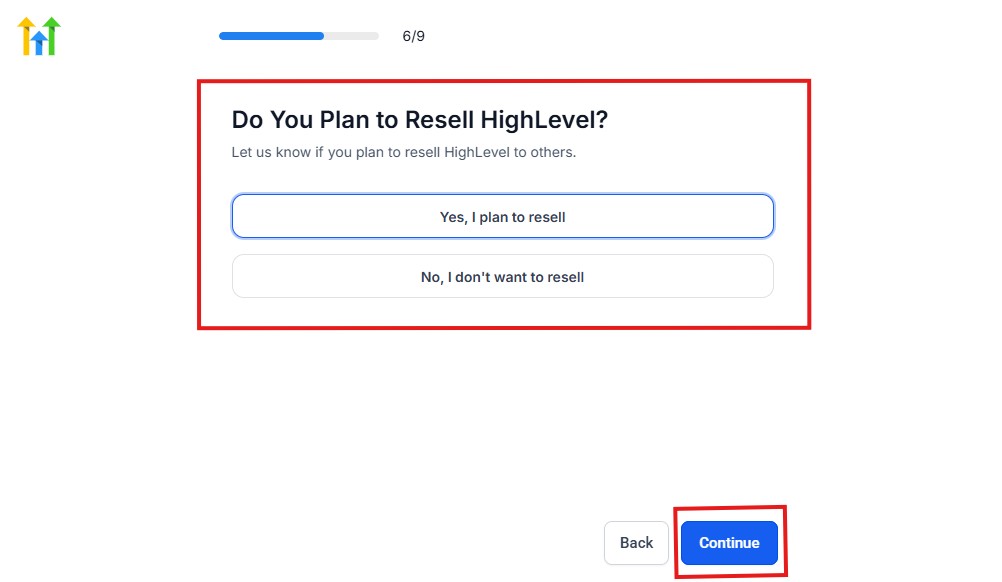
Select Yes if you plan to resell Go High Level and No if you don't have interest.
Click continue, and you will have the page below.
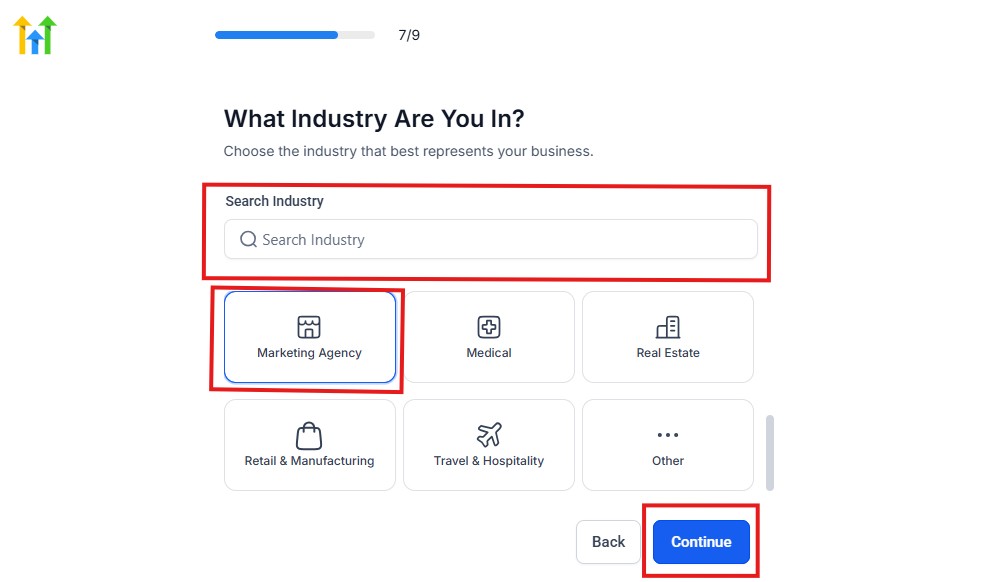
If you take a closer look at the image above, you need to select the industry that you operate.
You can also use the search button if you can't find it right away. Once you see it, click on it and click on the continue button.
And you will have the page below.
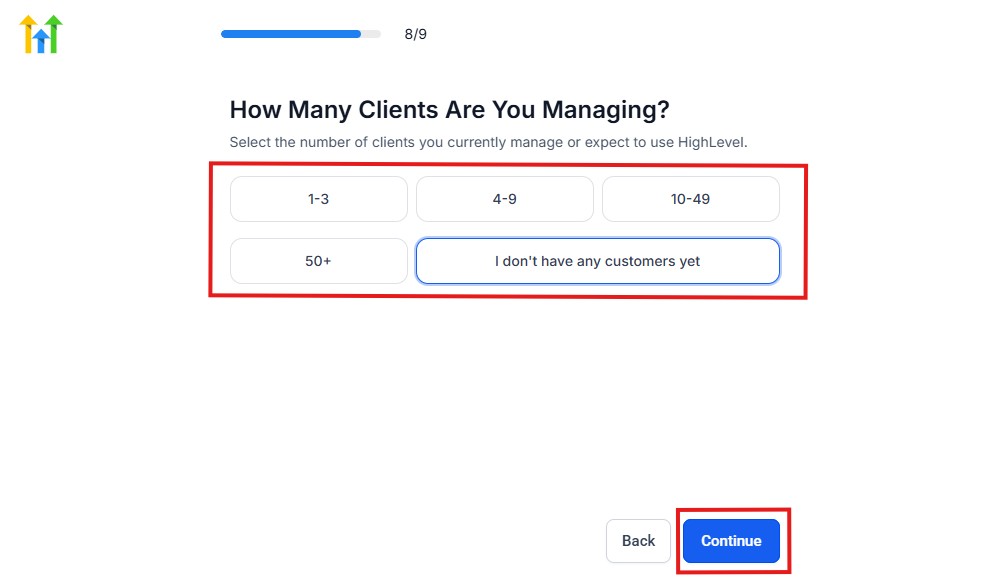
You need to indicate the number of customers that you currently have. Select “I don't have any customers yet” if you currently don't have any.
Hit the continue button, and you will have the page below.
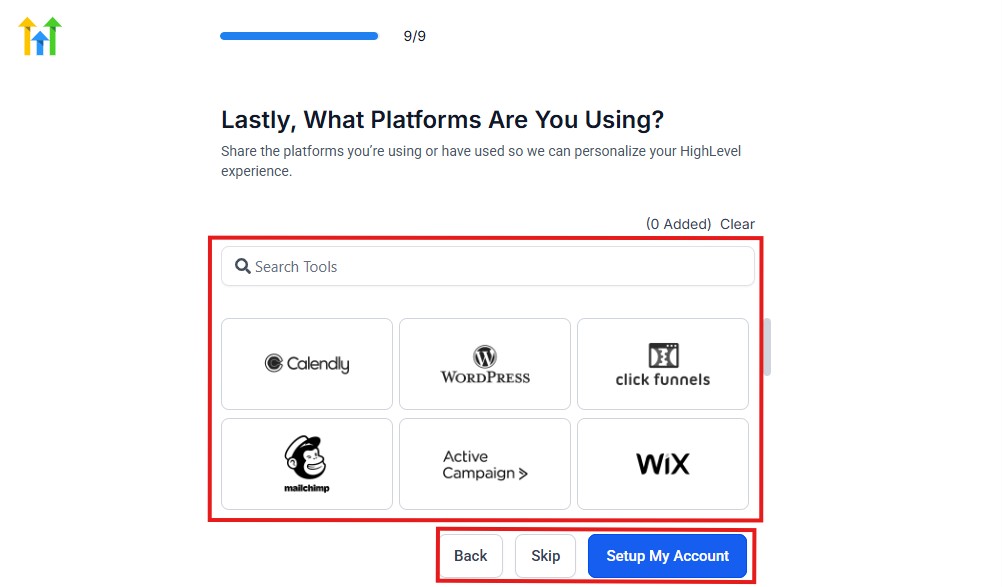
If you currently use any other software, this is where you connect it to GoHighLevel, and you can also skip it if you don't have any.
Then, you have the page below, which is an onboarding call.
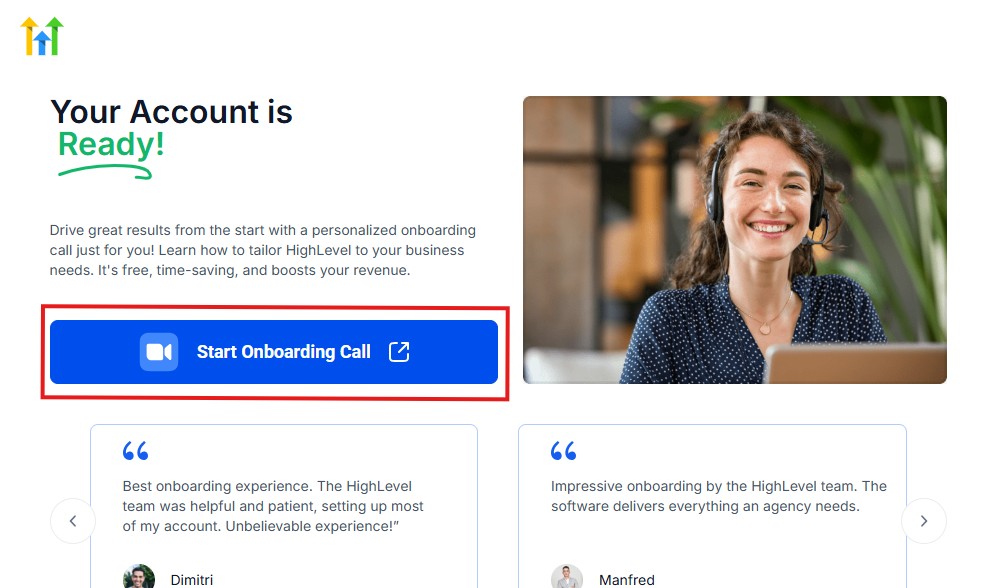
The GoHighLevel onboarding call is a 1-hour call that will connect you with a GoHighLevel expert and discuss how you can get started right away and have your account set up as well.
If you are not interested in the call, just stroll down and click “Not now, take me to my account.“
Now, you have your dashboard.
⚙️ Step 3: Configure Your Business Information
Begin by setting up your advisory firm's profile inside GoHighLevel.
This information will appear across many of your client-facing communications and assets.
Be sure to include:
- 🏢 Business name
- 🌐 Website URL
- 📞 Business phone number
- 📧 Professional email address
- 📍 Office address and service areas
- 🎨 Company logo and brand colors
- 📱 Social media profiles (where applicable)
- 🕒 Business hours
Consistent branding helps reinforce professionalism and trust.
👥 Step 4: Add Team Members and Assign Permissions
If you operate as part of a financial advisory team, invite relevant staff members into the platform.
Examples of team roles may include:
| 👤 Team Member | 📌 Primary Responsibility |
|---|---|
| 💼 Financial Advisors | Client strategy and relationship management |
| 👩💻 Administrative Staff | Scheduling and communications |
| 📋 Client Service Associates | Onboarding and support |
| 📊 Operations Managers | Workflow oversight |
| 🤝 Relationship Managers | Ongoing client engagement |
Assigning appropriate permissions helps maintain security while ensuring team members have access to the information they need.
📈 Step 5: Build Your Client Pipeline
GoHighLevel's CRM pipeline allows you to track prospects and clients through every stage of their journey.
A sample financial advisory pipeline may include:
🟢 New Inquiry
📞 Discovery Call Scheduled
💬 Discovery Meeting Completed
📄 Proposal or Recommendations Presented
🤝 Prospect Considering Options
✍️ Client Agreement Completed
🚀 Client Onboarding Started
✅ Active Client
📅 Ongoing Review Process
⭐ Referral Opportunity
This visibility helps ensure no prospect or client is overlooked.
📋 Step 6: Create Consultation Forms
Many prospective clients prefer sharing basic information before scheduling a meeting.
GoHighLevel allows you to create customized intake forms.
Examples of information you may collect include:
- Name
- Email address
- Phone number
- Primary financial concerns
- Preferred meeting times
- General financial goals
- Questions they would like addressed
Keeping forms concise encourages completion while providing valuable context before consultations.
📅 Step 7: Set Up Appointment Calendars
Scheduling is an essential part of managing an advisory practice.
GoHighLevel allows prospects and clients to book appointments based on your availability.
Examples of appointment types include:
- 📞 Initial discovery calls
- 💼 Financial planning consultations
- 📈 Investment review meetings
- 👨👩👧 Retirement planning sessions
- 📋 Annual client review appointments
- 🤝 Strategy discussions
This reduces scheduling friction and improves convenience.
🤖 Step 8: Create Essential Automations
Automation can save valuable time while improving consistency.
Start with a few practical workflows.
Examples include:
✅ Sending confirmation messages after inquiries are submitted.
✅ Delivering appointment reminders.
✅ Following up after discovery meetings.
✅ Sending onboarding communications to new clients.
✅ Reminding clients about annual reviews.
You don't need dozens of automations to experience meaningful benefits.
📞 Step 9: Connect Your Communication Channels
Financial advisors often communicate through multiple channels.
GoHighLevel helps centralize these interactions.
Examples include:
- 📧 Email communications
- 💬 SMS messages (where appropriate)
- 📞 Phone calls
- 🌐 Website forms and chat widgets
- 📱 Other supported channels
Having communication histories in one place improves organization and responsiveness.
🔒 Step 10: Prioritize Security and Compliance Processes
Financial advisors work in a highly regulated environment.
While GoHighLevel can support relationship management and communication processes, it's important to establish clear internal policies regarding:
- 🔐 Data security practices
- 📋 Documentation procedures
- 📄 Record retention requirements
- ⚖️ Applicable regulatory obligations
- 🛡️ Access controls for team members
Always ensure that your operational workflows align with the compliance standards applicable to your jurisdiction and professional obligations.
🚀 Start With the Essentials
One of the biggest mistakes advisory firms make is trying to implement every GoHighLevel feature immediately.
You don't have to.
Focus first on:
✔️ Your CRM pipeline.
✔️ Appointment calendars.
✔️ Consultation forms.
✔️ A few practical automations.
Once these systems are functioning effectively, you can gradually expand your setup.
🌟 Build Systems That Strengthen Client Relationships
The purpose of setting up GoHighLevel isn't to create additional complexity.
The goal is to build systems that help your advisory practice:
✅ Improve efficiency.
✅ Strengthen communication.
✅ Stay organized.
✅ Deliver better client experiences.
✅ Support long-term growth.
When configured thoughtfully, GoHighLevel can become the operational backbone of your advisory business – allowing you to spend less time managing repetitive administrative tasks and more time doing what you do best:
✨ helping individuals and families make informed financial decisions, pursue meaningful goals, and build greater confidence about their financial futures. 📈🤝💼🚀
Important Note: Financial advisors should ensure that any client communication, data management processes, and operational workflows implemented through GoHighLevel comply with all applicable industry regulations and internal compliance requirements.
Managing Prospects & Clients With the CRM
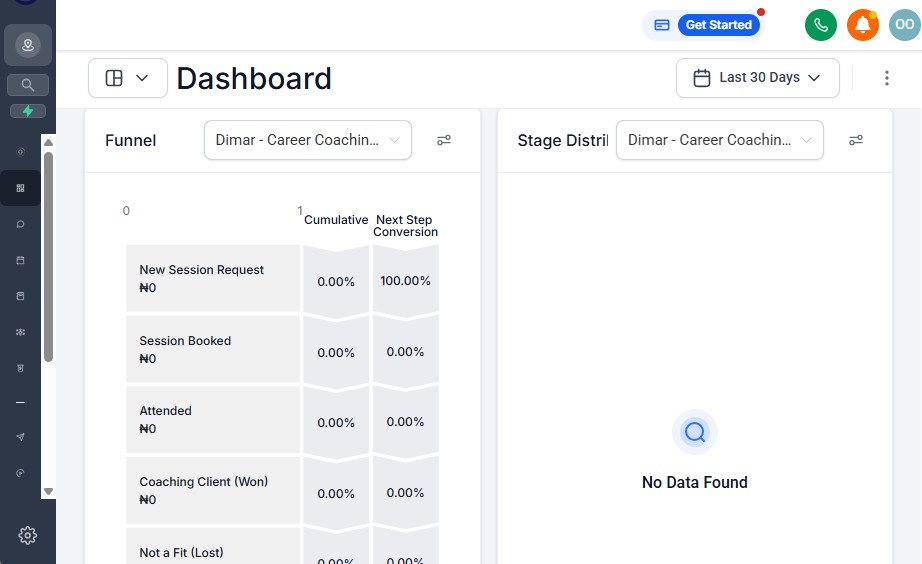
For financial advisors, every inquiry represents more than just a potential business opportunity.
It could be someone planning for retirement, preparing for their children's education, protecting their family's future, or seeking guidance during a major life transition.
The challenge is that as your advisory practice grows, keeping track of every prospect, client interaction, meeting, and follow-up becomes increasingly difficult.
Without a structured system, it's easy to forget important conversations, lose valuable information, or miss opportunities to strengthen client relationships.
This is where GoHighLevel's CRM (Customer Relationship Management) system becomes incredibly valuable.
It helps you organize prospect and client information, track opportunities, and manage every stage of the relationship more effectively.
👥 Keep Client Information in One Place
Financial advisors often communicate with clients through multiple channels.
Important details can quickly become scattered across:
- 📧 Email inboxes
- 📞 Phone call logs
- 💬 Text conversations
- 📋 Paper notes and notebooks
- 📝 Separate spreadsheets
- 📅 Calendar entries
GoHighLevel centralizes these interactions in one place.
You can store information such as:
- 👤 Contact details
- 📞 Communication histories
- 📧 Email interactions
- 💬 SMS conversations
- 📝 Internal notes
- 📅 Meeting records
- 🎯 Client objectives and priorities
- 📄 Onboarding progress
This helps you stay organized while delivering a more personalized experience.
📈 Track Prospects Through Every Stage
Not every prospect becomes a client immediately.
Many individuals need time to:
- 🤔 Understand their options.
- 👨👩👧 Discuss decisions with family members.
- 📋 Compare multiple advisors.
- 🤝 Build confidence before moving forward.
GoHighLevel's pipeline feature allows you to visualize where each prospect stands.
A typical advisory pipeline may include:
🟢 New Inquiry
📞 Discovery Call Scheduled
💬 Discovery Meeting Completed
📄 Recommendations Presented
🤔 Prospect Evaluating Options
✍️ Client Agreement Completed
🚀 Client Onboarding Started
✅ Active Client
📅 Annual Review Scheduled
⭐ Referral Opportunity
This visibility helps ensure that no opportunity falls through the cracks.
🎯 Understand Client Goals More Deeply
Financial planning is highly personal.
Understanding each client's objectives allows you to provide more meaningful guidance.
Examples of information you may track include:
- 🏖️ Retirement goals
- 🎓 Education funding priorities
- 🏠 Homeownership objectives
- 👨👩👧 Family considerations
- 💰 Investment preferences
- 🛡️ Risk tolerance discussions
- 📈 Long-term financial aspirations
Having this information readily available helps you deliver more thoughtful service.
👥 Improve Team Collaboration
If you operate within a larger advisory practice, collaboration becomes increasingly important.
Examples of team members may include:
| 👤 Team Member | 📌 Primary Responsibility |
|---|---|
| 💼 Financial Advisors | Client strategy and recommendations |
| 👩💻 Administrative Staff | Scheduling and communication |
| 📋 Client Service Associates | Onboarding and follow-ups |
| 📊 Operations Managers | Workflow oversight |
| 🤝 Relationship Managers | Ongoing engagement |
A centralized CRM ensures everyone stays informed and aligned.
⏰ Never Miss an Important Follow-Up
Consistent follow-up is critical in financial services.
GoHighLevel allows you to create reminders and tasks for situations such as:
✅ Following up after discovery meetings.
✅ Checking in with prospects who are still considering options.
✅ Scheduling annual review appointments.
✅ Reconnecting with inactive prospects.
✅ Reaching out regarding important milestones.
These reminders help strengthen relationships while improving consistency.
📊 Gain Better Visibility Into Business Performance
Your CRM isn't simply a contact database.
It's also a valuable source of business insights.
By reviewing pipeline activity, you can better understand:
- 📈 How many inquiries you're receiving.
- 📞 How many discovery calls are being scheduled.
- 📄 How many prospects become clients.
- 🤝 Which referral sources perform best.
- ❌ Where opportunities tend to stall.
These insights can help you improve your processes over time.
💬 Deliver a More Personalized Experience
Clients want to feel understood – not treated like account numbers.
Having access to communication histories, meeting notes, and important milestones allows you to provide a more personalized experience.
Examples include remembering:
- 🎂 Significant life events.
- 👨👩👧 Family circumstances.
- 🏖️ Retirement timelines.
- 🎯 Financial priorities.
- 📅 Upcoming review dates.
Thoughtful details often strengthen trust and loyalty.
🚀 Turn Your CRM Into a Relationship-Building Tool
At its core, a CRM should help you strengthen relationships while improving efficiency.
When used strategically, GoHighLevel can help your advisory business:
✅ Stay organized.
✅ Improve communication consistency.
✅ Strengthen client experiences.
✅ Increase growth opportunities.
✅ Support long-term business success.
The goal isn't simply to collect contact information.
The goal is to ensure that every individual who interacts with your practice feels valued, supported, and confident that they're working with an advisor who genuinely cares about helping them achieve their financial goals.
By implementing structured CRM processes, you'll spend less time searching for information and more time doing what matters most –
✨ helping individuals and families navigate important financial decisions, build confidence about their futures, and pursue the lives they envision with greater peace of mind. 📈🤝💼🚀
Important: Financial advisors should ensure that any client data management practices align with the regulatory and privacy requirements applicable to their jurisdiction and professional responsibilities.
Automating Client Follow-Ups & Communication
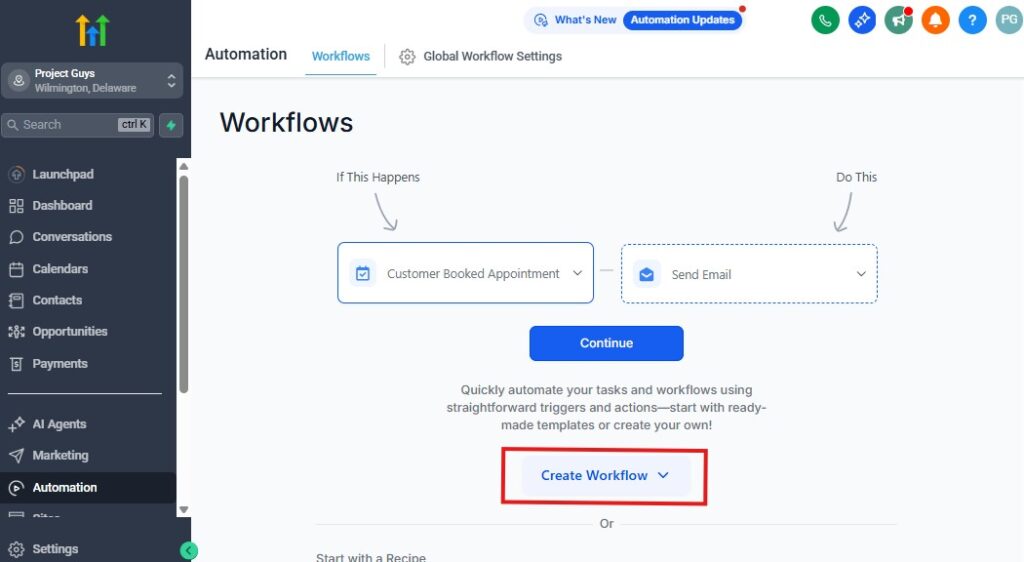
One of the biggest reasons financial advisors miss growth opportunities isn't because they lack expertise.
It's because consistent communication becomes increasingly difficult as their client base expands.
As a financial advisor, you're often balancing multiple responsibilities at the same time.
On any given day, you may be:
- 📈 Developing financial strategies
- 🤝 Meeting with prospective clients
- 📋 Preparing recommendations and reports
- 📞 Responding to client questions
- 📅 Conducting review meetings
- 📄 Managing onboarding activities
With so much happening behind the scenes, important follow-ups can sometimes be delayed or overlooked.
Unfortunately, inconsistent communication can negatively affect both prospect conversion and client satisfaction.
This is where GoHighLevel's automation features can make a meaningful difference.
By automating repetitive communication tasks, you can improve responsiveness, strengthen relationships, and free up more time to focus on providing valuable financial guidance.
🤖 Why Automation Matters for Financial Advisors
Financial advising is built on trust and consistency.
Prospects and clients want to work with professionals who are:
- ⚡ Responsive to their needs
- 🤝 Reliable and dependable
- 💬 Clear communicators
- 📋 Organized and proactive
- 🎯 Committed to helping them achieve their goals
As your practice grows, maintaining this level of communication manually becomes increasingly challenging.
Automation helps ensure that important touchpoints happen consistently.
📩 Respond to New Inquiries Automatically
First impressions matter.
When someone reaches out seeking financial guidance, responding quickly can significantly improve your chances of securing a consultation.
With GoHighLevel, you can automatically send:
📧 Welcome emails
📱 SMS acknowledgments (where appropriate)
📅 Consultation scheduling links
For example:
“Hi {{contact.first_name}}, thank you for reaching out. We're looking forward to learning more about your financial goals. You can schedule your initial consultation using the link below.”
These immediate responses reassure prospects that their inquiry has been received.
📅 Automate Appointment Reminders
Missed meetings can disrupt workflows and delay important conversations.
Automated reminders help prospects and clients stay informed.
Examples include reminders sent:
📅 Three days before the meeting
📱 24 hours before the appointment
⏰ One hour before the scheduled consultation
These reminders may include:
- Appointment details
- Meeting instructions
- Video conferencing links
- Preparation guidance
This improves attendance while enhancing professionalism.
💬 Follow Up After Discovery Meetings
Many prospects don't become clients immediately.
They often need time to:
- 🤔 Reflect on recommendations.
- 👨👩👧 Discuss decisions with family members.
- 📋 Evaluate their options.
- 🤝 Build confidence before moving forward.
Without follow-up, promising opportunities can fade away.
GoHighLevel allows you to automate communications that:
📩 Check whether prospects have questions.
📞 Encourage the next conversation.
💬 Keep your advisory practice top-of-mind.
Consistent follow-up often improves conversion rates.
🔄 Re-Engage Inactive Prospects
Some individuals may postpone financial decisions for months.
Examples include:
- 🏖️ Retirement planning discussions
- 🎓 Education funding strategies
- 📈 Investment planning opportunities
- 🏠 Major life transitions
- 💼 Business succession conversations
Automated nurture campaigns can help you reconnect with these individuals when they're ready to move forward.
📅 Automate Ongoing Client Check-Ins
Communication shouldn't stop once someone becomes a client.
Regular touchpoints strengthen relationships and demonstrate commitment.
Examples include:
✅ Annual review reminders.
✅ Meeting confirmations.
✅ Educational communications.
✅ Milestone check-ins.
✅ General relationship-building messages.
These interactions help clients feel supported over the long term.
⭐ Encourage Referrals Strategically
Satisfied clients often become excellent referral sources.
However, advisors sometimes miss opportunities to encourage introductions.
GoHighLevel can help you build systems that remind you to:
🤝 Express appreciation.
💬 Stay connected with clients.
⭐ Encourage referrals where appropriate and compliant.
Strong relationships frequently lead to organic growth.
👥 Improve Internal Coordination
If you work alongside administrative staff or client service associates, automation can improve team communication.
Internal notifications can alert team members when:
🔔 A new inquiry is received.
🔔 A consultation is booked.
🔔 A prospect progresses through the pipeline.
🔔 A client review meeting is approaching.
🔔 Follow-up activities are required.
These alerts help everyone remain aligned.
⚙️ Start With High-Impact Workflows
You don't need dozens of automations to improve your practice.
Begin with a few practical systems.
Examples include:
✅ New inquiry responses.
✅ Appointment reminders.
✅ Discovery meeting follow-ups.
✅ Annual review reminders.
✅ Re-engagement campaigns for inactive prospects.
These workflows can produce meaningful efficiency improvements.
🌟 Use Automation to Strengthen Relationships
Automation should never replace the personal relationships that define great financial advisors.
Instead, it should eliminate repetitive administrative work so you can focus on what matters most.
When used thoughtfully, GoHighLevel can help your advisory practice:
✅ Improve communication consistency.
✅ Save valuable time.
✅ Strengthen client relationships.
✅ Reduce administrative burdens.
✅ Support sustainable growth.
At the end of the day, clients don't choose financial advisors solely because they understand markets and investment products.
They choose professionals they trust to provide guidance, communicate consistently, and help them navigate important financial decisions with confidence.
By combining automation with genuine care and expertise, you'll build stronger relationships while creating a more efficient and scalable advisory business. 📈🤝💼📊🚀
Important: Financial advisors should ensure that all automated communications comply with applicable industry regulations, privacy standards, and internal compliance requirements.
Appointment Scheduling & Financial Consultations
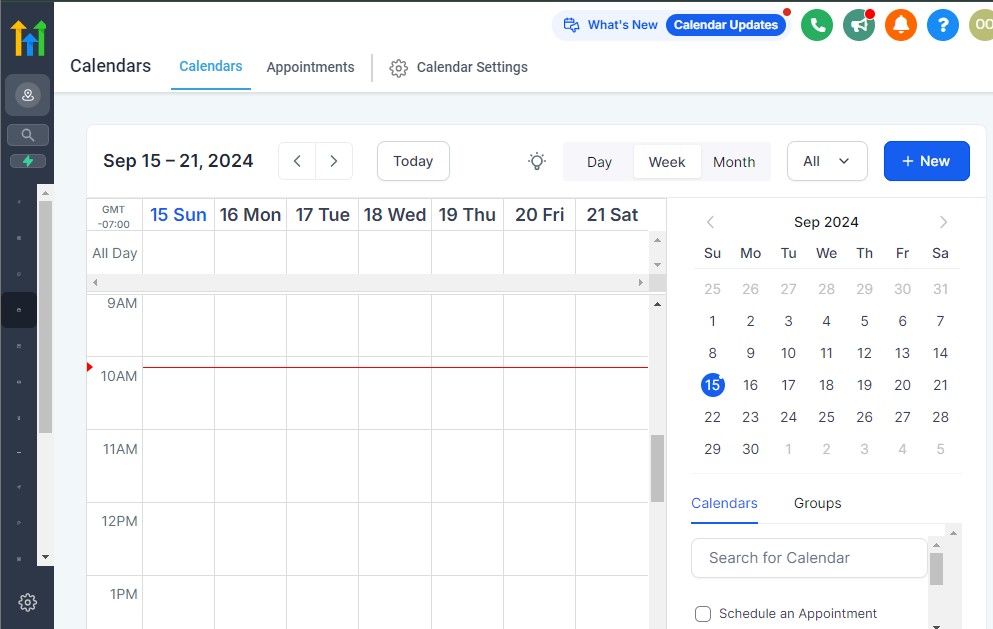
For financial advisors, the client experience often begins long before someone signs an agreement or transfers assets.
It starts with the consultation process.
Whether you're conducting an initial discovery call, retirement planning meeting, investment review, or annual client check-in, the way you manage appointments can significantly influence how prospects and clients perceive your practice.
Unfortunately, many advisors still rely heavily on manual scheduling methods.
This often leads to:
- 📧 Endless email exchanges.
- 📞 Multiple phone calls to coordinate availability.
- 📅 Scheduling conflicts and double bookings.
- ❌ Missed appointments.
- ⏳ Valuable time spent on administrative tasks.
As your advisory business grows, these challenges become increasingly difficult to manage.
This is where GoHighLevel's appointment scheduling tools can help.
They simplify the scheduling process, improve organization, and create a more seamless experience for both prospects and existing clients.
📅 Allow Prospects to Schedule Consultations Online
Modern clients value convenience.
Many people prefer booking appointments online rather than waiting for callbacks or exchanging multiple emails.
With GoHighLevel, prospects and clients can schedule meetings through:
- 🌐 Your website
- 📄 Landing pages
- 📧 Email campaigns
- 💬 SMS communications (where appropriate)
- 📱 Other supported channels
This allows individuals to choose available times that work best for them.
The easier you make it for people to connect with you, the more likely they are to take the next step.
💼 Create Different Consultation Types
Not every meeting serves the same purpose.
GoHighLevel allows you to create different appointment types based on your services.
Examples include:
| 📌 Consultation Type | ⏱️ Suggested Duration |
|---|---|
| 📞 Initial Discovery Call | 20–30 minutes |
| 📈 Financial Planning Consultation | 60 minutes |
| 🏖️ Retirement Planning Session | 60–90 minutes |
| 💰 Investment Strategy Meeting | 45–60 minutes |
| 📋 Annual Client Review | 45–60 minutes |
| 🤝 Follow-Up Consultation | 30 minutes |
This ensures adequate time is allocated for each type of discussion.
⏰ Reduce No-Shows With Automated Reminders
Missed appointments can disrupt schedules and delay important financial conversations.
Automated reminders help prospects and clients stay informed.
Examples include reminders sent:
📅 Three days before the meeting
“We're looking forward to discussing your financial goals and answering any questions you may have.”
📱 24 hours before the appointment
“This is a reminder about your upcoming consultation. We look forward to speaking with you soon.”
⏰ One hour before the scheduled meeting
“Your appointment begins shortly. Please use the meeting information provided below to join.”
These reminders help improve attendance while enhancing professionalism.
🔄 Simplify Rescheduling
Life circumstances can change unexpectedly.
Clients may occasionally need to adjust appointments due to personal or professional commitments.
GoHighLevel allows individuals to reschedule when necessary without prolonged back-and-forth communication.
Benefits include:
✅ Greater flexibility.
✅ Improved convenience.
✅ Reduced administrative work.
✅ Better calendar management.
Convenience contributes to stronger client relationships.
📅 Manage Ongoing Client Reviews Efficiently
Financial advising isn't a one-time interaction.
Many successful advisory practices rely on ongoing engagement.
Examples of recurring meetings include:
- 📈 Quarterly portfolio reviews
- 📋 Annual financial plan updates
- 🏖️ Retirement readiness assessments
- 🎯 Goal progress discussions
- 🤝 Relationship review meetings
Efficient scheduling systems help ensure these important conversations happen consistently.
📊 Monitor Consultation Performance
Your scheduling system can provide valuable insights into practice performance.
Examples of metrics worth tracking include:
| 📌 Metric | 🎯 Why It Matters |
|---|---|
| 📅 Consultations Booked | Indicates lead generation effectiveness |
| 👥 Meeting Attendance Rate | Reflects prospect engagement |
| 🤝 Consultation-to-Client Conversion Rate | Measures sales effectiveness |
| ❌ No-Show Rate | Highlights communication opportunities |
| 📈 Review Meeting Completion Rate | Supports client retention efforts |
These insights help you refine your processes over time.
✨ Create a Strong First Impression
The scheduling experience often shapes how people feel about working with your practice.
A smooth appointment process communicates that your business is:
- ⚡ Professional
- 📋 Organized
- 💬 Responsive
- 🤝 Client-focused
- 🎯 Committed to delivering excellent service
These qualities help establish trust from the very beginning.
🚀 Turn Consultations Into Long-Term Relationships
Consultations aren't simply meetings on your calendar.
They're opportunities to:
- 👂 Understand client concerns.
- 🎯 Explore financial objectives.
- 📚 Provide valuable education.
- 🤝 Demonstrate your expertise.
- 💼 Build trust and credibility.
The easier you make it for people to schedule time with you, the more opportunities you'll have to develop meaningful relationships.
By using GoHighLevel to streamline appointment scheduling, your advisory practice can:
✅ Save valuable administrative time.
✅ Improve operational efficiency.
✅ Reduce no-shows.
✅ Increase scheduling convenience.
✅ Support long-term growth.
At the end of the day, financial advising is about helping people navigate important life decisions with confidence.
Efficient scheduling systems ensure that prospects and clients can access your guidance when they need it most – while allowing you to focus on what you do best:
✨ helping individuals and families build stronger financial futures, pursue meaningful goals, and gain greater peace of mind through trusted advice and long-term partnership. 📈🤝💼🚀
Important: Financial advisors should ensure that all communication and scheduling practices comply with applicable industry regulations and internal compliance requirements.
Funnels & Lead Generation for Financial Advisors
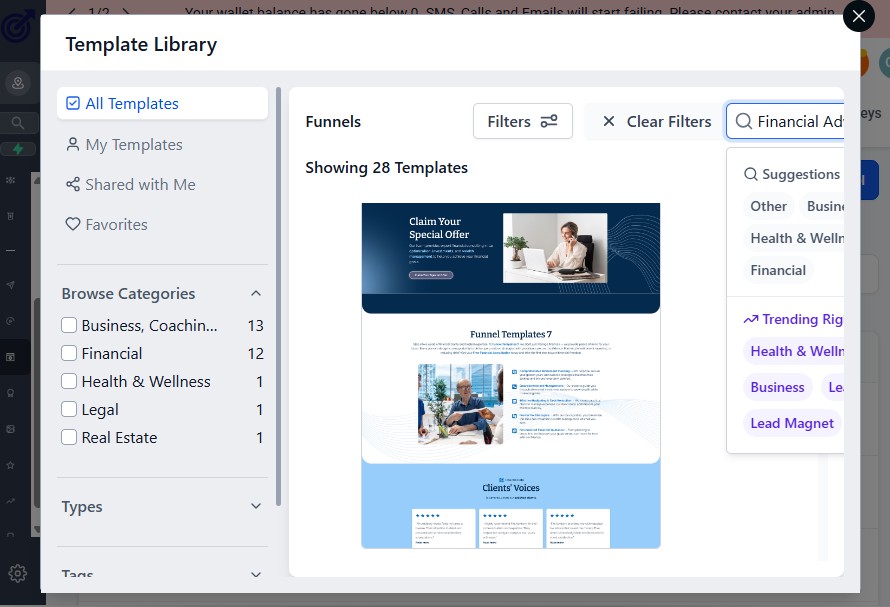
No matter how knowledgeable or experienced you are as a financial advisor, your business needs a consistent flow of qualified prospects to grow.
Many advisory practices rely heavily on:
- 🤝 Referrals from existing clients
- 🌐 Organic website traffic
- 📢 Networking events and seminars
- 📱 Social media content
- 👥 Professional partnerships
While these channels can generate opportunities, they often produce unpredictable results.
Some months may bring a steady stream of inquiries, while others may leave you wondering where your next ideal client will come from.
If you want to build a more sustainable advisory business, you need systems that consistently attract and nurture potential clients.
This is where GoHighLevel funnels can help.
Instead of sending prospects to a general website where they may browse and leave without taking action, funnels are designed to guide visitors toward one specific goal—becoming a qualified lead or scheduling a consultation.
🚀 What Is a Financial Advisory Funnel?
A funnel is a structured process that moves someone from awareness to action.
For financial advisors, that action may include:
- 📅 Booking a discovery call
- 📈 Requesting a financial consultation
- 📋 Registering for an educational webinar
- 📄 Downloading a retirement planning guide
- 📞 Scheduling a portfolio review discussion
- 🤝 Learning more about your advisory services
Funnels simplify the decision-making process by helping prospects understand what to do next.
📈 Why Financial Advisors Need Funnels
Most people don't choose a financial advisor immediately after discovering them online.
Before making a decision, prospects often:
- 🔍 Research multiple advisors.
- ⭐ Read reviews and testimonials.
- 📚 Consume educational content.
- 🤔 Evaluate trust and credibility.
- 👨👩👧 Discuss financial decisions with family members.
A well-designed funnel helps address these concerns while building confidence.
Funnels can help your advisory practice:
✅ Generate more qualified prospects.
✅ Increase consultation bookings.
✅ Improve conversion rates.
✅ Create more predictable growth.
✅ Measure marketing effectiveness.
📋 Educational Lead Magnet Funnels
Financial services often require trust-building before someone is ready to schedule a consultation.
Educational resources can help position you as a knowledgeable professional.
Examples include offering:
- 🏖️ “The Ultimate Retirement Planning Checklist”
- 📈 “10 Common Investment Mistakes to Avoid”
- 🎓 “A Parent's Guide to Education Planning”
- 💰 “Financial Planning Essentials for Business Owners”
Visitors exchange their contact information to access these resources.
This allows you to nurture relationships over time.
📅 Free Consultation Funnels
Many financial advisors offer introductory consultations.
A consultation funnel may include:
1️⃣ Landing page explaining who you help.
2️⃣ Overview of your advisory approach.
3️⃣ Testimonials and credibility indicators.
4️⃣ Consultation scheduling form.
5️⃣ Confirmation page.
This structure encourages interested prospects to take the next step.
🎥 Webinar & Educational Event Funnels
Educational events can be powerful lead generation tools.
Examples may include topics such as:
- 📈 Retirement readiness strategies
- 🏠 Financial planning for major life events
- 💼 Wealth-building principles
- 🎯 Goal-based financial planning
A webinar funnel can help you:
✅ Educate prospective clients.
✅ Demonstrate expertise.
✅ Generate qualified conversations.
✍️ What Makes a High-Converting Financial Funnel?
Successful financial advisory funnels often share several important characteristics.
✅ Clear Messaging
Prospects should quickly understand:
- Who you serve
- What problems you help solve
- Why they should trust you
Examples include:
📈 “Helping Families Build Stronger Financial Futures.”
🏖️ “Guiding You Toward a More Confident Retirement.”
💼 “Financial Strategies Designed Around Your Goals.”
Clarity reduces confusion and improves engagement.
⭐ Social Proof & Credibility
Financial decisions often involve significant trust.
Prospects want reassurance that they're speaking with a professional who understands their needs.
Examples of credibility builders include:
- ⭐ Client reviews (where permitted)
- 🎓 Professional credentials
- 🏆 Industry recognition
- 📚 Educational content
- 💬 Success stories shared in accordance with applicable regulations
Social proof can strengthen confidence.
📋 Simple Lead Capture Forms
Long forms can discourage prospects from taking action.
Focus on collecting essential information, such as:
- Name
- Email address
- Phone number
- Primary financial concern
- Preferred consultation timing
Additional information can be gathered during the discovery process.
📣 Strong Calls-to-Action
Tell prospects exactly what to do next.
Examples include:
📅 Schedule Your Consultation
📈 Start Planning for Your Future
📋 Download Your Free Retirement Guide
🤝 Speak With a Financial Professional Today
Strong calls-to-action help prospects move forward with confidence.
📢 Drive Traffic Into Your Funnels
Funnels only work when qualified prospects enter them.
Common traffic sources for financial advisors include:
- 🌐 Organic website traffic
- 📱 Social media content
- 📧 Email marketing campaigns
- 🎥 Educational webinars
- 🤝 Referral partnerships
- 📢 Paid advertising (where appropriate and compliant)
- 👥 Community events and seminars
GoHighLevel helps you track where your inquiries originate so you can focus on the channels producing meaningful results.
📊 Monitor Funnel Performance
Funnels generate valuable insights that can improve your marketing efforts.
Metrics worth tracking include:
- 👀 Landing page visitors
- 📝 Lead submissions
- 📅 Consultations scheduled
- 🤝 Consultation attendance rates
- 📈 Prospect-to-client conversion rates
- 💰 Cost per qualified lead
Regular reviews allow you to refine your strategies over time.
🌟 Build a Predictable Growth System
The goal isn't simply to attract more inquiries.
The goal is to attract the right prospects and guide them toward becoming long-term clients.
By using GoHighLevel funnels strategically, your advisory business can:
✅ Generate more qualified opportunities.
✅ Increase consultation bookings.
✅ Improve conversion rates.
✅ Strengthen marketing performance.
✅ Support sustainable growth.
At the end of the day, financial advising is about helping people make informed decisions about their futures.
Well-designed funnels help ensure that more individuals discover your expertise, connect with your values, and take the next step toward building a trusted advisory relationship.
And when your lead generation system operates consistently, you'll have more freedom to focus on what matters most –
✨ helping individuals and families pursue meaningful goals, navigate important financial decisions, and build greater confidence about the future they envision. 📈🤝💼📊🚀
Important: Financial advisors should ensure that all marketing activities, educational materials, and lead generation strategies comply with the regulatory requirements applicable to their jurisdiction.
Managing Financial Proposals, Client Onboarding & Documentation
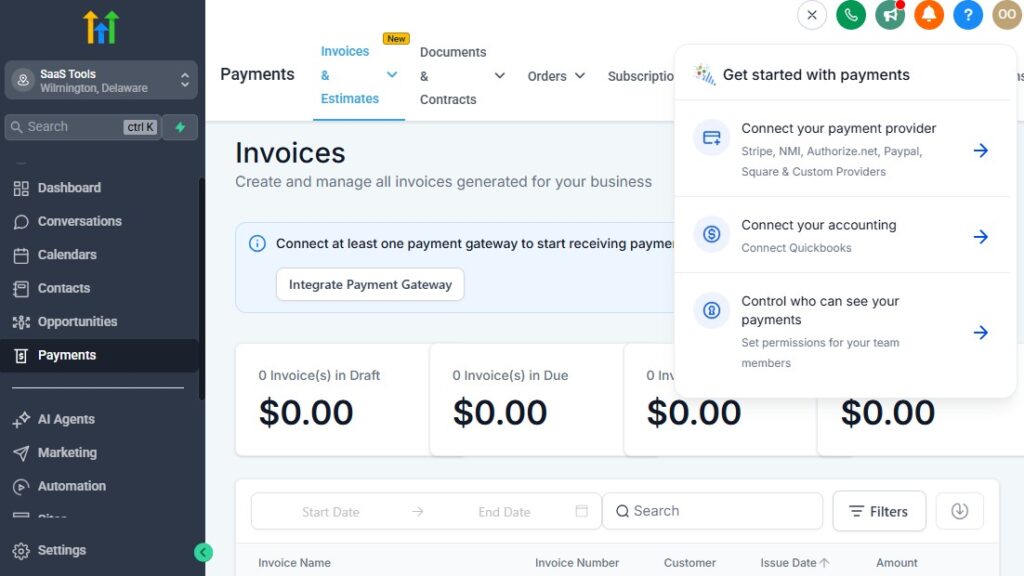
Generating leads and scheduling consultations are important steps in growing a financial advisory practice.
However, the real transformation happens when a prospect decides to move forward and become a client.
At this stage, your ability to manage proposals, onboarding processes, and client documentation efficiently can significantly influence the overall client experience.
Without organized systems, financial advisors often find themselves dealing with:
- ❌ Delays in onboarding new clients
- 📄 Difficulty tracking important documents
- 😓 Administrative overwhelm
- 📞 Missed follow-ups during the onboarding process
- 🤝 Frustrated prospects who lose confidence in the experience
This is where GoHighLevel can help streamline your workflows.
By creating structured processes around proposals, onboarding, and documentation, you can provide a smoother, more professional experience for every client.
📄 Organize Financial Proposals More Efficiently
For many advisory firms, proposals represent an important milestone in the client journey.
Depending on your services, proposals may involve:
- 📈 Financial planning recommendations
- 🏖️ Retirement planning strategies
- 💰 Wealth management solutions
- 🛡️ Insurance planning discussions
- 🎓 Education planning approaches
- 🏠 Estate planning considerations
Rather than trying to remember who has received what information, GoHighLevel allows you to track proposal progress through your CRM.
A sample proposal pipeline may include:
🟢 Recommendations Being Prepared
📤 Proposal Presented
🤔 Prospect Evaluating Options
💬 Follow-Up Required
✍️ Agreement Accepted
🚀 Client Onboarding Started
❌ Opportunity Closed
This visibility helps ensure that every opportunity receives appropriate attention.
💬 Improve Proposal Follow-Ups
Prospects rarely make important financial decisions immediately.
They often need time to:
- 👨👩👧 Discuss decisions with family members.
- 📋 Review available options.
- 🤔 Consider long-term implications.
- 🤝 Develop confidence in their advisor.
Without structured follow-up, these opportunities can easily stall.
GoHighLevel helps you create systems that remind you to:
✅ Check in with prospective clients.
✅ Clarify questions or concerns.
✅ Reinforce the value of your services.
✅ Encourage the next conversation.
Consistent follow-up often improves conversion outcomes.
🚀 Create a Seamless Client Onboarding Experience
The onboarding process often shapes how clients feel about working with your practice.
A well-organized experience communicates professionalism and attention to detail.
Examples of onboarding activities may include:
- 📋 Welcome communications.
- 📝 Client intake questionnaires.
- 📅 Scheduling strategy meetings.
- 📄 Requesting required information.
- 🤝 Introducing team members involved in the relationship.
GoHighLevel can help automate many of these touchpoints.
This creates a smoother transition from prospect to active client.
📋 Collect Client Information Efficiently
Advisory relationships often require gathering important information.
Examples may include:
- 👤 Contact details.
- 🎯 Financial priorities and goals.
- 👨👩👧 Family considerations.
- 📈 Areas of interest or concern.
- 📅 Preferred communication methods.
- 📝 Additional planning considerations.
Using structured forms and workflows helps improve consistency while reducing manual effort.
📂 Keep Documentation Organized
Financial advisors frequently manage a significant amount of documentation.
Examples include:
- 📄 Meeting summaries.
- 📋 Intake forms.
- 📝 Internal notes.
- 📧 Communication histories.
- 📅 Appointment records.
- 🤝 Client onboarding updates.
Organized systems improve accessibility and efficiency.
When important information is easy to locate, your team can respond more confidently and effectively.
👥 Improve Team Coordination
If you work alongside support staff or client service associates, coordination becomes increasingly important.
Examples of team roles may include:
| 👤 Team Member | 📌 Primary Responsibility |
|---|---|
| 💼 Financial Advisors | Client strategy and guidance |
| 👩💻 Administrative Staff | Scheduling and communications |
| 📋 Client Service Associates | Onboarding support |
| 📊 Operations Managers | Workflow oversight |
| 🤝 Relationship Managers | Ongoing client engagement |
A centralized system helps everyone remain informed and aligned.
🤖 Automate Administrative Workflows
Many onboarding activities are repetitive.
Automation helps ensure these important steps occur consistently.
Examples include:
✅ Welcome message sequences.
✅ Appointment scheduling reminders.
✅ Internal task notifications.
✅ Client onboarding checklists.
✅ Follow-up reminders during decision-making stages.
These workflows save time while improving consistency.
📈 Gain Visibility Into Your Onboarding Process
Tracking onboarding activities can reveal opportunities for improvement.
You may gain insights into:
- 📞 Follow-up effectiveness.
- 📅 Time required to complete onboarding.
- 🤝 Prospect-to-client conversion trends.
- ❌ Bottlenecks delaying progress.
- 📊 Opportunities to improve efficiency.
These observations support more informed decision-making.
🌟 Deliver a Better Client Experience
Financial planning often involves deeply personal conversations.
Clients appreciate working with professionals who are organized, proactive, and attentive to detail.
Using GoHighLevel to support proposals, onboarding, and documentation can help your advisory practice:
✅ Improve communication consistency.
✅ Reduce administrative burdens.
✅ Strengthen client confidence.
✅ Increase operational efficiency.
✅ Deliver a more seamless client experience.
At the end of the day, financial advising isn't simply about numbers and investment strategies.
It's about helping people navigate important life decisions with clarity and confidence.
By building systems around proposals, onboarding, and documentation, you'll spend less time chasing paperwork and more time focusing on what truly matters –
✨ guiding individuals and families toward their financial goals, strengthening long-term relationships, and helping clients build greater confidence about the future they envision. 📈🤝💼🚀
Important: Financial advisors should ensure that all onboarding procedures, documentation practices, and client communication workflows align with the regulatory, compliance, and privacy requirements applicable to their jurisdiction and professional obligations.
Learn More:
- GoHighLevel Review: (My Experience After 4 Years)
- What is GoHighLevel? [A User Experience]
- GoHighLevel Features: Complete List
- GoHighLevel Integrations
- GoHighLevel Pricing: (Costs Breakdown)
- Is GoHighLevel a CRM?: (Find Out Here💡)
- Is GoHighLevel Legit?: (Find Out Here 💡)
- Is GoHighLevel Worth It? (Find Out Here 💡)
- 15+ GoHighLevel Benefits: (Why You Need It)
Reputation Management & Reviews for Financial Advisors
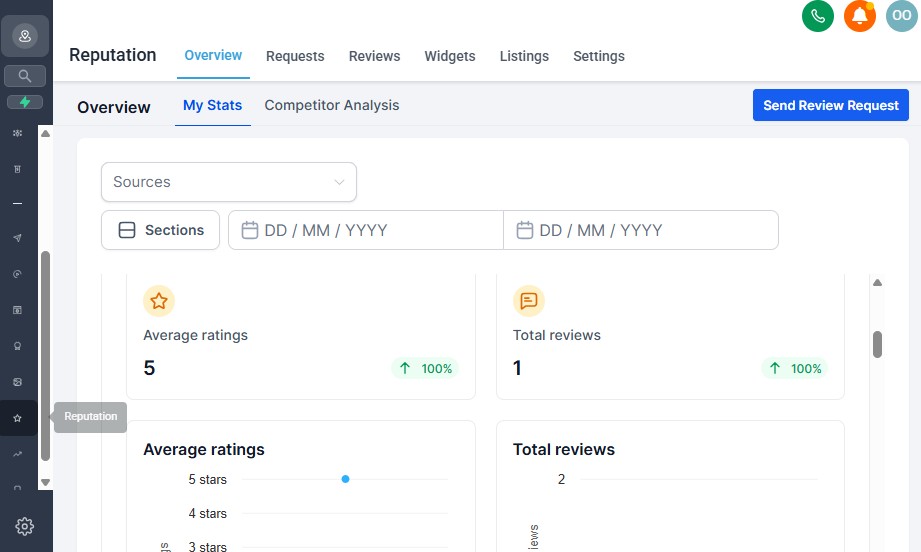
In the financial services industry, trust is everything.
People aren't simply choosing someone to help them invest money.
They're selecting an advisor they believe can help them navigate some of the most important financial decisions of their lives.
Whether it's planning for retirement, funding a child's education, protecting their family's future, or building long-term wealth, clients want confidence that they're working with someone who is knowledgeable, trustworthy, and committed to their best interests.
Because of this, your professional reputation can significantly influence the growth of your advisory practice.
Before reaching out to a financial advisor, many prospective clients will:
- 🔍 Research advisors online.
- ⭐ Read reviews and testimonials.
- 🌐 Visit websites and educational resources.
- 🤝 Ask friends and family for recommendations.
- 💬 Compare multiple professionals before making a decision.
This means your reputation often becomes your first impression.
This is where GoHighLevel's reputation management features can support your relationship-building efforts.
⭐ Why Reputation Matters for Financial Advisors
Financial decisions often involve significant emotional and financial considerations.
Prospective clients want reassurance that they're working with someone who is:
- 💼 Experienced and knowledgeable
- 🤝 Honest and trustworthy
- 📋 Organized and professional
- 💬 Responsive and communicative
- 🎯 Focused on helping clients achieve their goals
A strong reputation helps reduce uncertainty.
It can also help your advisory business:
✅ Generate more inquiries.
✅ Increase consultation bookings.
✅ Strengthen credibility.
✅ Encourage referrals.
✅ Differentiate your practice from competitors.
🤝 Build Trust Through Exceptional Experiences
The most effective reputation strategy begins with delivering outstanding service.
Clients are more likely to speak positively about advisors who consistently:
- 👂 Listen carefully to their concerns.
- 💬 Communicate clearly and regularly.
- 📅 Follow through on commitments.
- 📋 Stay organized and prepared.
- 🎯 Demonstrate genuine care for their success.
Positive experiences naturally create opportunities for advocacy.
⭐ Encourage Feedback Thoughtfully
Satisfied clients are often willing to share their experiences.
However, many advisors simply forget to ask.
When appropriate and compliant within applicable regulations, you may encourage feedback after positive milestones such as:
- 🎯 Completing a successful onboarding process.
- 📅 Conducting annual review meetings.
- 🤝 Achieving long-term planning objectives.
- 💬 Receiving positive verbal feedback from clients.
Thoughtful requests can help strengthen your reputation over time.
🤖 Automate Relationship-Building Processes
GoHighLevel allows advisors to create systems that support ongoing communication.
Examples include automating:
📅 Annual review reminders.
📧 Client appreciation messages.
💬 Follow-up communications.
🤝 Relationship check-ins.
While reputation management should always remain personal, automation can help ensure consistency.
🌟 Turn Satisfied Clients Into Advocates
One of the most valuable sources of growth for financial advisors is referrals.
Clients who trust your guidance may introduce you to:
- 👨👩👧 Family members.
- 🤝 Friends and colleagues.
- 🏢 Business associates.
- 💼 Other professionals within their network.
Strong relationships often create opportunities for organic growth.
💬 Respond to Feedback Professionally
Whether feedback is shared publicly or privately, professionalism matters.
For positive feedback:
❤️ Express gratitude.
🙏 Thank clients for their trust.
🤝 Reinforce your commitment to serving them well.
For constructive feedback:
👂 Listen carefully.
💬 Respond respectfully.
📞 Offer to continue conversations privately when appropriate.
🎯 Focus on solutions and continuous improvement.
How you handle feedback can strengthen confidence in your practice.
📍 Strengthen Your Professional Presence
A strong reputation contributes to greater visibility and credibility.
Consistent relationship-building efforts can support:
📈 Increased trust.
🤝 More referral opportunities.
⭐ Improved brand perception.
💼 Stronger positioning within your market.
Trust often becomes a competitive advantage.
🚀 Make Reputation Management Part of Your Practice
One of the biggest mistakes advisory firms make is treating reputation management as an occasional activity.
The most successful advisors approach it differently.
They intentionally build trust into every stage of the client journey.
With GoHighLevel, you can create systems that help you:
✅ Maintain consistent communication.
✅ Strengthen client relationships.
✅ Encourage advocacy and referrals.
✅ Support long-term business growth.
✅ Reinforce professionalism.
At the end of the day, clients don't choose financial advisors simply because they understand investment products and market trends.
They choose professionals they trust to guide them through important financial decisions with integrity, competence, and genuine care.
By prioritizing reputation management, you're doing more than strengthening your professional image.
You're building confidence, deepening relationships, and creating a strong foundation for the continued growth of your advisory practice. 📈🤝💼⭐🚀
Important: Financial advisors should always ensure that any review requests, testimonials, endorsements, and marketing activities comply with the regulatory and compliance requirements applicable to their jurisdiction and professional obligations.
Reporting & Analytics for Financial Advisory Firms
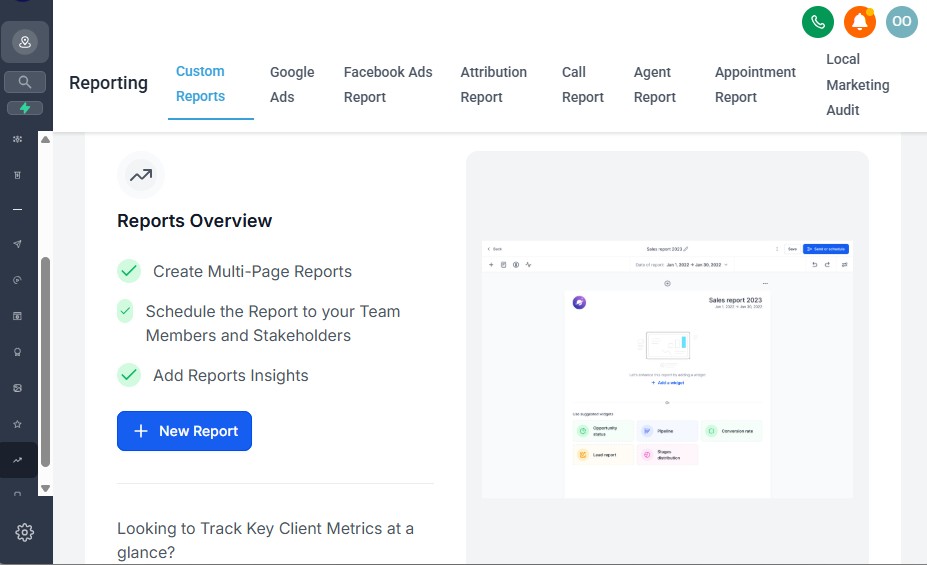
As a financial advisor, your primary focus is helping clients make informed decisions and work toward their long-term financial goals.
However, if you want to build a sustainable and growing advisory practice, it's equally important to understand how your business is performing behind the scenes.
If you don't know:
- 📈 Where your prospects are coming from,
- 📅 How many consultations convert into clients,
- 🤝 Which referral sources generate the best opportunities, or
- ❌ Where potential clients are dropping off in your process,
it becomes difficult to make strategic decisions that support long-term growth.
This is where GoHighLevel's reporting and analytics tools can help.
Instead of relying on assumptions, you can use data to understand what's working, identify areas for improvement, and make more informed business decisions.
📊 Why Reporting Matters for Financial Advisors
Many financial advisors focus primarily on serving clients and conducting meetings.
While these activities are essential, they don't always reveal the full picture of practice performance.
Reporting helps answer questions such as:
- ❓ How many new inquiries did we receive this month?
- ❓ Which marketing channels generated those inquiries?
- ❓ How many consultations were booked?
- ❓ How many prospects became clients?
- ❓ Which areas of our process require improvement?
These insights allow you to manage your practice more intentionally.
📈 Understand Where Your Prospects Are Coming From
Not all marketing efforts produce the same outcomes.
Your advisory practice may attract prospects through:
- 🤝 Client referrals
- 🌐 Organic website traffic
- 📱 Social media content
- 🎥 Educational webinars
- 📧 Email campaigns
- 🏢 Professional partnerships
- 📍 Community events and seminars
GoHighLevel helps you identify which channels generate the most meaningful opportunities.
This enables you to focus your efforts on activities that deliver results.
📅 Monitor Consultation Performance
Consultations often serve as the bridge between prospect interest and client relationships.
Tracking consultation performance can reveal important trends.
Examples of valuable metrics include:
| 📌 Metric | 🎯 Why It Matters |
|---|---|
| 📞 Discovery Calls Booked | Indicates lead generation effectiveness |
| 👥 Meeting Attendance Rate | Reflects prospect engagement |
| 🤝 Prospect-to-Client Conversion Rate | Measures sales effectiveness |
| ❌ No-Show Rate | Highlights communication opportunities |
| 📈 Review Meeting Completion Rate | Supports client retention efforts |
Understanding these numbers can help improve your processes over time.
📄 Evaluate Client Onboarding Trends
The onboarding process often shapes a client's perception of your practice.
Monitoring onboarding performance helps identify opportunities to improve efficiency.
Examples of questions you can answer include:
📋 How long does onboarding typically take?
📞 Are follow-ups occurring consistently?
🤝 Where do prospects tend to disengage?
📈 How effectively are new clients moving through the process?
These insights can help create a smoother client experience.
👥 Assess Team Performance
If you operate as part of a larger advisory firm, reporting can improve visibility into operational performance.
Examples include evaluating:
- 📞 Inquiry response times.
- 📅 Scheduling effectiveness.
- 💬 Communication consistency.
- 🤝 Client service activities.
- 📊 Workflow efficiency.
The goal isn't micromanagement.
Instead, it's identifying strengths and opportunities for improvement.
🔍 Identify Bottlenecks Before They Affect Growth
Every advisory practice experiences operational challenges.
The key is recognizing them early.
Reporting may reveal issues such as:
- 📞 Delayed responses to inquiries.
- 📅 Scheduling inefficiencies.
- 📄 Incomplete onboarding activities.
- 💬 Inconsistent follow-up practices.
- 🤝 Gaps within client communication processes.
Recognizing these patterns allows you to make adjustments before they impact growth.
📢 Measure Marketing Effectiveness
Marketing should always be viewed as an investment.
Understanding which efforts generate results helps you allocate resources more strategically.
GoHighLevel reporting can help you evaluate:
✅ Which campaigns generate inquiries.
✅ Which channels drive consultations.
✅ Which sources produce qualified prospects.
✅ Where adjustments may improve outcomes.
These insights support more confident decision-making.
🎯 Focus on Metrics That Matter Most
It's easy to become overwhelmed by data.
Rather than tracking everything, prioritize the metrics that directly influence growth.
Examples include:
📈 New prospect inquiries.
📅 Discovery calls scheduled.
🤝 New client conversions.
⭐ Referral trends.
💬 Client engagement activities.
📊 Pipeline progression rates.
Tracking these indicators consistently provides a clearer understanding of business performance.
🚀 Turn Insights Into Action
Reports only become valuable when they lead to meaningful improvements.
The true power of analytics lies in using insights to strengthen systems and enhance client experiences.
By leveraging GoHighLevel's reporting capabilities, your advisory practice can:
✅ Improve operational efficiency.
✅ Strengthen lead generation efforts.
✅ Enhance client experiences.
✅ Increase conversion opportunities.
✅ Support sustainable business growth.
At the end of the day, successful financial advisors don't rely solely on technical expertise and market knowledge.
They combine their professional experience with data-driven decision-making to build stronger practices.
By regularly reviewing your reports and acting on the insights they provide, you'll be better positioned to create a more organized, efficient, and growth-focused advisory business in 2026 and beyond. 📈🤝📊🚀
Important: Financial advisors should ensure that all reporting activities and client information management practices align with the regulatory, privacy, and compliance standards applicable to their jurisdiction and professional obligations.
Integrating GoHighLevel With Financial Tools & Platforms
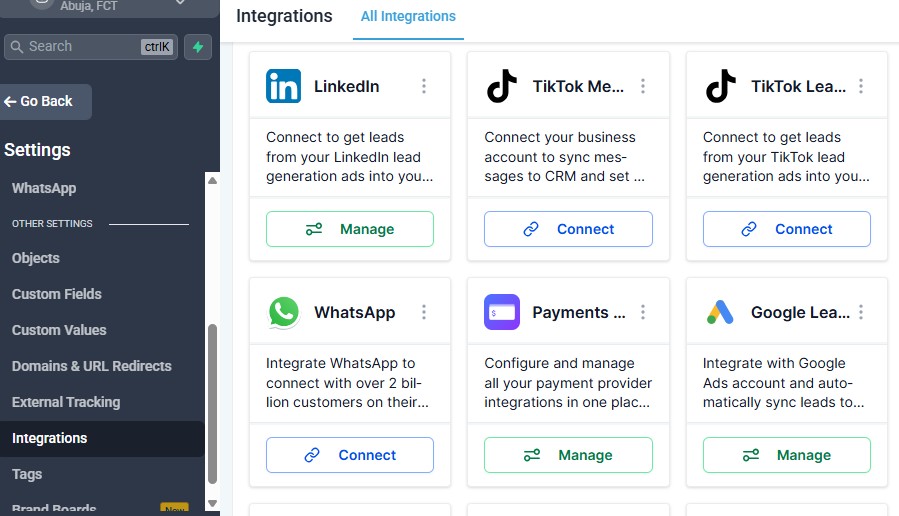
One of the biggest concerns financial advisors have when adopting a new platform is:
“Will I have to replace all the systems my practice already relies on?”
The good news is you don't have to.
GoHighLevel isn't designed to replace every specialized tool used within a financial advisory practice.
Instead, it works best as a central hub that helps connect your marketing, communication, scheduling, and relationship management activities.
The real advantage comes from integrating GoHighLevel with the tools and platforms you already depend on.
This creates a more efficient workflow while reducing repetitive administrative tasks.
🔗 Why Integrations Matter for Financial Advisors
Without integrations, advisory firms often face challenges such as:
- 📋 Entering the same client information multiple times.
- 📧 Switching constantly between different platforms.
- 📅 Managing disconnected calendars.
- 📄 Searching for documents across various systems.
- ❌ Correcting errors caused by duplicate data entry.
As your practice grows, these inefficiencies can consume valuable time and resources.
Integrations help simplify operations while improving consistency.
📞 Centralize Client Communication
Financial advisors frequently communicate with prospects and clients through multiple channels.
GoHighLevel helps bring these conversations together.
Examples include:
- 📧 Email communications
- 📞 Phone calls
- 💬 SMS messages (where appropriate)
- 🌐 Website forms and chat widgets
- 📱 Other supported communication channels
Having communication histories accessible in one place helps improve responsiveness and organization.
📅 Integrate Scheduling Tools
Appointment scheduling is an essential part of running an advisory practice.
Integrating calendar systems can help you:
✅ Avoid scheduling conflicts.
✅ Improve appointment visibility.
✅ Coordinate meetings efficiently.
✅ Simplify the booking process for prospects and clients.
These improvements contribute to a smoother client experience.
✍️ Connect E-Signature Platforms
Financial advisors often require signed agreements and documentation.
Examples may include:
- 📄 Client agreements.
- 📋 Advisory service acknowledgments.
- 📝 Consent forms.
- 🤝 Various onboarding documents.
Integrating electronic signature platforms can help you:
⚡ Accelerate approvals.
📉 Reduce paperwork.
📧 Simplify document delivery.
🤝 Improve onboarding efficiency.
The easier it is for clients to complete required documentation, the smoother the overall experience becomes.
☁️ Improve Documentation Management
Advisory practices frequently manage a significant amount of information.
Examples include:
- 📄 Meeting summaries.
- 📋 Intake questionnaires.
- 📝 Internal notes.
- 📧 Communication records.
- 📅 Appointment histories.
- 🤝 Onboarding updates.
Integrating document management systems can improve accessibility and organization.
This reduces the time spent searching for important information.
⚙️ Expand Workflows Through Automation Platforms
Not every application offers a direct integration.
Automation platforms can help bridge these gaps.
These solutions allow financial advisors to:
🔄 Transfer information between systems.
🔄 Trigger notifications automatically.
🔄 Update client records.
🔄 Reduce repetitive administrative work.
This flexibility allows you to design workflows that align with your firm's unique needs.
👥 Strengthen Team Collaboration
If you operate within a larger advisory practice, integrations can improve coordination.
Examples of team members may include:
- 💼 Financial Advisors
- 👩💻 Administrative Staff
- 📋 Client Service Associates
- 📊 Operations Managers
- 🤝 Relationship Managers
When everyone has access to the information they need, your team can operate more efficiently.
🎯 Integrate With Intention
One of the biggest mistakes businesses make is integrating tools simply because they can.
More integrations don't automatically produce better outcomes.
Instead, focus on solving genuine operational challenges.
Ask yourself:
❓ Are we spending too much time on repetitive tasks?
❓ Is communication becoming difficult to manage?
❓ Are scheduling systems creating unnecessary friction?
❓ Is important client information scattered across different platforms?
❓ Are inefficiencies affecting the client experience?
The best integrations simplify your workflows rather than complicate them.
🚀 Build a More Connected Advisory Practice
Technology should support your expertise—not distract from it.
When your systems work together effectively, your advisory practice can benefit from:
✅ Improved operational efficiency.
✅ Better client experiences.
✅ Reduced administrative burdens.
✅ Stronger team collaboration.
✅ Greater visibility into daily activities.
At the end of the day, GoHighLevel doesn't have to replace every tool you currently use.
Instead, it can serve as the operational center that connects your communication, scheduling, marketing, and relationship management processes.
By integrating the right platforms thoughtfully, you'll create a more organized and scalable advisory practice – allowing you to focus on what truly matters:
✨ helping individuals and families make informed financial decisions, pursue meaningful goals, and build greater confidence about their financial futures. 📈🤝💼🚀
Important: Financial advisors should always evaluate integrations carefully and ensure that all technology choices, communication processes, and client data workflows align with applicable regulatory, privacy, and compliance requirements within their jurisdiction.
Frequently Asked Questions
❓ 1. Is GoHighLevel good for financial advisors?
Yes.
GoHighLevel can be a valuable platform for financial advisors who want to improve organization, strengthen communication, and streamline operational workflows.
It can help advisors manage activities such as:
✅ Capturing and organizing prospect inquiries.
✅ Tracking prospects and clients through the CRM.
✅ Automating follow-ups and reminders.
✅ Scheduling consultations and review meetings.
✅ Managing onboarding workflows.
✅ Monitoring business performance through reporting tools.
Whether you're an independent advisor or part of a larger advisory practice, GoHighLevel can help improve efficiency and consistency.
❓ 2. Can GoHighLevel help financial advisors generate more leads?
Absolutely.
GoHighLevel includes several features designed to support lead generation efforts.
Examples include:
- 🚀 Funnels and landing pages
- 📋 Lead capture forms
- 📅 Consultation booking calendars
- 📧 Automated nurture campaigns
- 📊 CRM pipelines for tracking opportunities
When used strategically, these tools can help financial advisors build a more predictable prospect acquisition system.
❓ 3. Can prospects schedule consultations through GoHighLevel?
Yes.
GoHighLevel's scheduling features allow prospective and existing clients to book appointments online.
Appointments can be scheduled through:
- 🌐 Your website
- 📄 Landing pages
- 📧 Email communications
- 💬 SMS messages (where appropriate)
This creates a more convenient experience while reducing administrative workload.
❓ 4. Can GoHighLevel automate client follow-ups?
Yes.
Automation is one of GoHighLevel's strongest capabilities.
You can automate activities such as:
✅ Responding to new inquiries.
✅ Sending appointment reminders.
✅ Following up after discovery meetings.
✅ Delivering onboarding communications.
✅ Scheduling annual review reminders.
These automations improve consistency while helping advisors save valuable time.
❓ 5. What financial advisory tasks should still be handled outside GoHighLevel?
While GoHighLevel can streamline many aspects of running an advisory practice, certain industry-specific functions are better managed using specialized financial tools and platforms.
Examples include:
- 📈 Investment management and portfolio administration
- 🧾 Financial planning software calculations
- 📊 Performance reporting and analytics specific to investments
- 📄 Regulatory and compliance documentation systems
- 🏦 Custodial and account management activities
- ⚖️ Compliance monitoring and supervision functions
- 💰 Tax preparation and filing services
Think of GoHighLevel as the platform that helps you attract, nurture, convert, and retain clients, while your financial-specific systems support the technical and regulatory aspects of delivering advisory services.
Final Thoughts
Building a successful financial advisory practice requires much more than understanding markets, investment strategies, and financial planning principles.
While your expertise plays a critical role in helping clients make informed decisions, long-term success also depends on having systems that help you attract qualified prospects, manage relationships effectively, streamline operations, and deliver exceptional client experiences.
As your practice grows, relying solely on manual processes can quickly become overwhelming.
You may find yourself spending more time:
- 📞 Responding to prospect inquiries
- 📅 Coordinating consultations and review meetings
- 📄 Managing onboarding processes and documentation
- 💬 Following up with prospective clients
- 📋 Organizing client information
- ⭐ Nurturing relationships and encouraging referrals
Instead of focusing on what you do best – guiding clients toward their financial goals.
This is where GoHighLevel can become a valuable addition to your advisory practice.
By combining tools for CRM management, automation, appointment scheduling, funnels, reputation management, and reporting, GoHighLevel helps financial advisors simplify many of the administrative tasks that often consume valuable time.
